
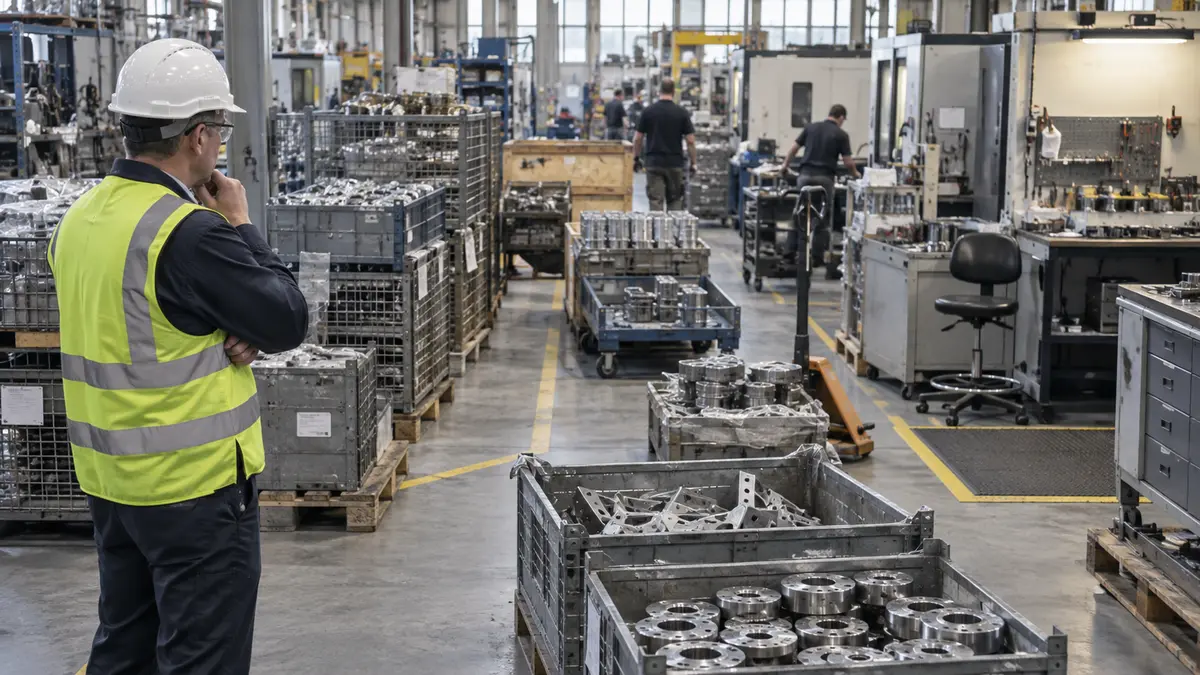
Manufacturing waste is not limited to scrap. It also appears as waiting, excess work in progress, avoidable movement, rework, unstable planning and management time consumed by repeated firefighting.
Why hidden waste matters
Many losses are absorbed by overtime, inventory or additional coordination. Because output eventually leaves the factory, the underlying instability can remain invisible in headline KPIs.
Look beyond isolated cost categories
Operational waste affects flow and creates secondary effects: longer lead times, lower schedule reliability, capacity uncertainty and delayed decisions. Improving one department without considering the whole system can simply move the queue elsewhere.
Use direct observation and reliable data
Compare planned and actual process sequences, standard times, downtime, quality losses, material availability and decision paths. The aim is to distinguish symptoms from the constraint that limits overall performance.
Turn findings into implementation
A useful improvement plan identifies priorities, owners, dependencies and verification criteria. Daily management should make deviations visible and ensure that actions are closed with evidence.
Learn more about Production Consulting & Operational Excellence, REFA & capacity analysis and implementation support.

Comments are closed